Stonehenge: Discovery with Dan Snow Debunked (Transcript)
Hello, this is my co-presenter Alice, and this is my co-presenter Robert John Langton this is Bob and Alex debunks another Stonehenge video
Deep in the English Countryside lies one of the most famous ancient monuments Stonehenge. Stonehenge is totally unique; there’s nothing like this ring of colossal Stone arches anywhere else in the world; it’s as old as the pyramids; it’s one of the world’s greatest archaeological sites, but who built it and why how did ancient Builders construct this extraordinary Stone Circle for centuries there’ve been so many unanswered questions about these Stones
Well that all looks very professional do you think that they will give us some answers at last well who knows Alice all we can do is watch the program and we’ll come back if there’s a clear error and point out to our viewers the correct information
In this program, I’m joining the investigations that are still unlocking the mysteries of Stonehenge I’ll be following the most recent hunt for where the biggest Stones came from there’s some big ones up ahead; oh yeah fantastic, and exploring how they were moved well done, everyone some a round of applause I’ll come face to face with the ancient people of Stonehenge and their beautiful Treasures – look at that’s fabulous and reveal the unbelievable sophistication of Stonehenge’s Builders – they knew their map they knew their astronomy that’s why stone is unique and will never find anything like this is the story of Stonehenge.
One of the things I love about Stonehenge is that one minute you’re just driving through typical English Countryside with its Hills and its valleys and its Fields, and the next minute, without warning, boom first Stonehenge right there, one of the world’s greatest prehistoric sites.
Built 2 and 1/ half thousand years before Britain’s first ever town towns or cities even existed. Stonehenge sits in the heart of the Wiltshire landscape on Salsbury Plane – 3 miles from the town of Amesbury, and once you’re Offroad, it still feels as wild as ever; when I was a kid visiting Stonehenge, he used to drive your car right up and park next to it and then clamber all over the stones and thankfully that’s changed now it’s much more special much better for the local environment you park some distance away, and then you walk across these beautiful downlands past these ancient mysterious humps and bumps in the landscape evidence of a rich prehistoric past building your anticipation that you’re about to reach somewhere very special and then you arrive and see this.
Wow you just don’t get a sense of the scale of this place until you walk inside these Stones you don’t get a feel for its power its intensity until you’re standing in here right up next them and they dwarf you look at them seven metres high each one of those weighs 20 tons it just feels so ancient and there’s just nowhere else in the world like this literally there is nowhere else where we have stone circles with these big Stones placed on top these lentils forming arches it’s Unique
These giant stones are just part of this or inspiring Monument within this incredible ring of huge stones called Sarsons there are smaller stones and these are known as the blue stones and every one of the stones big and small have been carefully placed in position and the entire stone circle is then surrounded by a huge bank and outer ditch but unlike other great ancient discoveries Stonehenge is different because it was never lost for thousands of years it stood here but people forgot what it was built for and it became a magnificent mystery.
The whole place is phenomenal and you find yourself thinking, who built it why did they build it when did they build it but above all, you think, how did they build it with the technology had available how did they transport these enormous Stones Some distance to this place how did they turn them on their ends sink them in the ground anchor them it’s just mind-blowing and all this happened thousands of years ago before the wheel had even been introduced to Britain so 900 years ago when people first began to speculate about how Stonehenge was created they simply could not believe that the giant Stones could have been put here by Ordinary People.
Wow that was a spectacular start to the program by Dan so why have we paused here I just want to stop you there to look at this picture at 11:00 you got a couple of parallel lines now they’ve been cut into the grass to represent a ditch now they’re not ditches these are cut marks in the grass why they couldn’t cut the grass to show you the ditch is another matter but there’s a degree of dishonesty here especially when you put the Hillstone in the middle of the Avenue because the Hillstone is not in the middle of the Avenue and it makes me very suspicious of what he’s going to tell you is not 100% accurate.
With a pretty wacky Theory, this is an illustration of one particular popular account of just how Stonehenge came to be, and this account is literally magical you can see the stones being laid here into the Stone Circle by a giant and it’s not being built right here it’s being built in Ireland before being magicked here by the wizard Merlin this Fantastical tale may sound ludicrous today, but it shows how people have been grappling for Centuries with the puzzle of how the stones got here, and it’s still a hot topic of research today.
I’m heading to the ancient Technology Centre in Dorset where they’re testing out a possible Theory the weather is grim today but that wouldn’t have stopped our Stone Age ancestors that’s a pretty big chunk of rock isn’t it is yeah it’s about a ton and a half ton and a half okay Anthony Whitlock is an experimental archaeologist at the centre it’s sort of equivalent to some of the smaller blue stones that we find at Stonehenge scary to think this would be one of the smaller Stones today at Stone Henge that’s amazing what is it a sort of sledge is is this the latest thinking on how they were moved yeah absolutely yes so it’s based on Stone carving some Assyria and ancient Egypt which are showing big statues being moved on sort of skis on Runners like we’ve got on the on the ground the old Theory which goes back to the 1500s was Stone Age people prehistoric people moved stones on rollers and that it works on flat level ground but experiments since the 1950s have proven that big lumps of rock if they’re being attempted to move sort of uphill or downhill on rollers you lose control very easily yeah
Does that mean they have now proven that using rollers to move the stones is no longer feasible? Mr Langdon, yes, it’s a bit obvious that you could not roll large Stones across Open Fields, Woods, Hills and forests. The question is, can you Sledge these Stones across the exact same environment?
Once on the move a sledge proved easier to control than rollers although a little bit more difficult to get moving in the first place so you need a lot of force you need a lot of force more than just be snow can provide unfortunately yes we’re going to need a little help Mighty as you are luckily we got an army of 50 volunteers on hand to flex their muscles grab a bit of rope let’s divide in half hope you’re feeling strong you can imagine the whole Stone AG Community coming together a bit like this to help move the rocks to an important place like Stonehenge with someone taking charge of the stone shifting today that’s me every I’m feeling good here we go ready 3 2 1 go
Let’s do it again; ready, okay? We’re going to try for another one here, ready? Okay, everyone, 3 2 1 go, oh, look at that. It’s moving; the wet, muddy ground certainly helps the sledges slip along fairly easily, and Stone Age people might well have used the weather to their advantage in just the same way. Okay, stop. Brilliance let her strong well-done everyone give yourself a round of applause look at that well that was a really interesting experiment; it shows that it is possible to move a big Stone over some distance using this setup, provided you have a lot of people to help with 50 people we moved our Stone a few meters quite easily and archaeologists are now pretty certain that this is how Stonehenge’s ancient Builders moved the stones 4 and half thousand years ago.
That’s brilliant. We now know for sure how they got the stones to Stonehenge at last, don’t we, Bob?
Sadly not Alice, you just looked at 50 people dragging a 1.5-ton Stone just 20 yards. The stones of Stonehenge can weigh up to 25 tons when it comes to the larger trilithons in the centre, so in this experiment, you would actually need 830 people dragging the stone, and that is over a flat wet ground you would need double that number for a small hill and as you can see from this profile map of the journey from Wales to Stonehenge you have about 90 Hills to cross and therefore it’s not impossible it’s totally futile to even try or imagine a little bit like rolling the stones eventually archaeologists will come to the conclusion that it went via boat.
400 years ago when the first person to really scrutinise the stones arrived on the scene, he was certainly impressed by Inigo Jones the most famous architect of the time and a man who knew all about putting up Stones Jones was enthralled he was convinced this site had been put together by very skilled Master Craftsman he noticed that some of the stones had large chunks gouged out of them this is realised fit neatly snugly on top of those knobs on the uprights someone had skilfully put these arches together like a huge ancient Lego model there’s only one people in his mind who it could be the Romans
Jones came up with a theory about what on Earth Stonehenge was that it was a Roman Temple built around 2,000 years ago; he began to measure and survey every single Stone to produce a plan to prove his theory; he knew that Romans built with a Keen Eye for Symmetry and proportion and this is the plan of the monument that he came up with just look at it here it’s very intricate and it’s perfect a little bit too perfect look he’s turned Stonehenge into an absolute Circle all the stones smooth exactly the same size almost interchangeable and as you can see the reality is a little bit more messy in fact if you overlay his plan over the Stone Circle it’s clear that Jones ignored the actual position of any standing stone that didn’t fit the Symmetry essentially Jones’s Roman Theory only worked he well made it up.
So Bob Stonehenge has a history of people making up stories of who and why the monument was built and its original design yes Alice they made it up in the past and they have continued to make it up even today and that is why this program has made it up again but about it being round as you can see from this aerial shot of stone h the monument is not complete and now our Stones missing from one quadrant of the circle
Well is that because people stole the stones to make buildings nearby
No it’s not Alice but that’s what they would like you to believe
So how do you know that is not true
Look at the picture again and note the position of the road if you wanted to steal the stones would you not move the ones closest to the road rather than the ones furthest away and harder to get to moreover you would need to break them up in the first place before putting them onto your cart now we’ seen this at Avery where the stones were stolen by carts but what they did beforehand was to burn the stones to break them up make them brittle we see no signs of that at all at Stonehenge we see no debris we see no fires what we do have is some of the stones being relics of the original size because in the Victorian days they gave them hammers to take pieces off and what they would have done is look for something on the floor which has fallen down nice and simple take a piece off and over a period of time what would happen that larger Stone will be smaller stones and this is what we see we see a scattering a smaller rounder stones from both wearing and chipping away from souvenir Hunters
So was Stonehenge not finished did they just run out of suitable Stone
Not at all Alice even this program has realised that this is a moon Temple to the dead hence the bodies Cremations therefore the temple would be Moon shaped and not a solar Temple this is shown in the illustration here showing that it was actually made for the mid winter Sunset to commemorate the dead.
Anybody who is anybody now came to look at these stones that included the world famous architect so Christopher Ren and look he left his Mark here that is graffiti of his name a cross for Christopher and then Ren here in this Mighty Stone as more and more people came to Stonehenge more theories were put forward about its Origins it was a Royal Viking camp or perhaps a temple built by an ancient British priesthood The Druids no one could agree and no one could find any proof to unlock the truth but that was about to change 300 years ago the discovery of a buried clue would finally reveal the true purpose of these ancient stones.
In the summer of 1721, one man began to explore the floor beyond the stones in the land around the monument; his name was William Stukeley he started to roam the surrounding landscape, eyes to the ground, searching for something, anything to help him understand Stonehenge’s ancient past as he was exploring this field Stukeley stumbled across something that felt familiar there was a depression almost like a dick in the landscape very difficult to see but with his practised eye it was clear and there was some Higher Ground here on the other side it reminded him of the ditch and bank that circled Stonehenge itself but the difference was this wasn’t circular this was straight it didn’t make much sense but then he noticed something even more intriguing.
He walked across this field for another 30 m until he found another ditch another bank you can see the line of it here and this one seemed to be parallel to the one he just discovered could it be that they were marking out some kind of route through this landscape and excitingly that route seemed to be leading up to Stonehenge intrigued Stukeley followed the course of the path he was determined to find out how it was connected to Stonehenge Stukeley quickly realised that the the path was leading him up to this big prominent Stone here and as he reached this Stone continued on the same line he realised that it was drawing him through that Arch there right into the centre of Stonehenge Stukeley was ecstatic that couldn’t have been an accident whoever laid out this route wanted people to move right up into the heart of the Monument Stukeley was fascinated and he had a convincing Theory
So why did you stop the program here Bob.
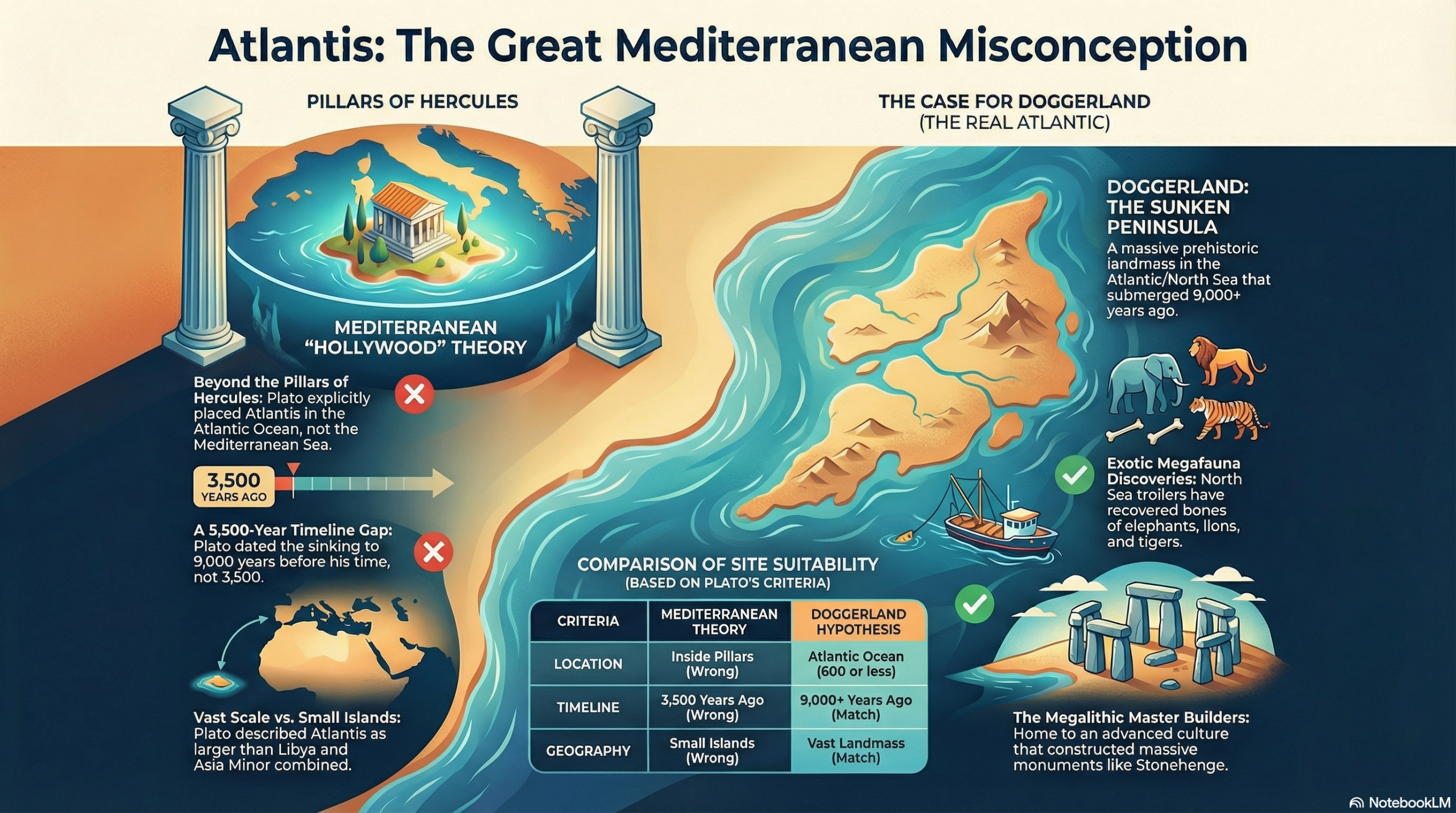
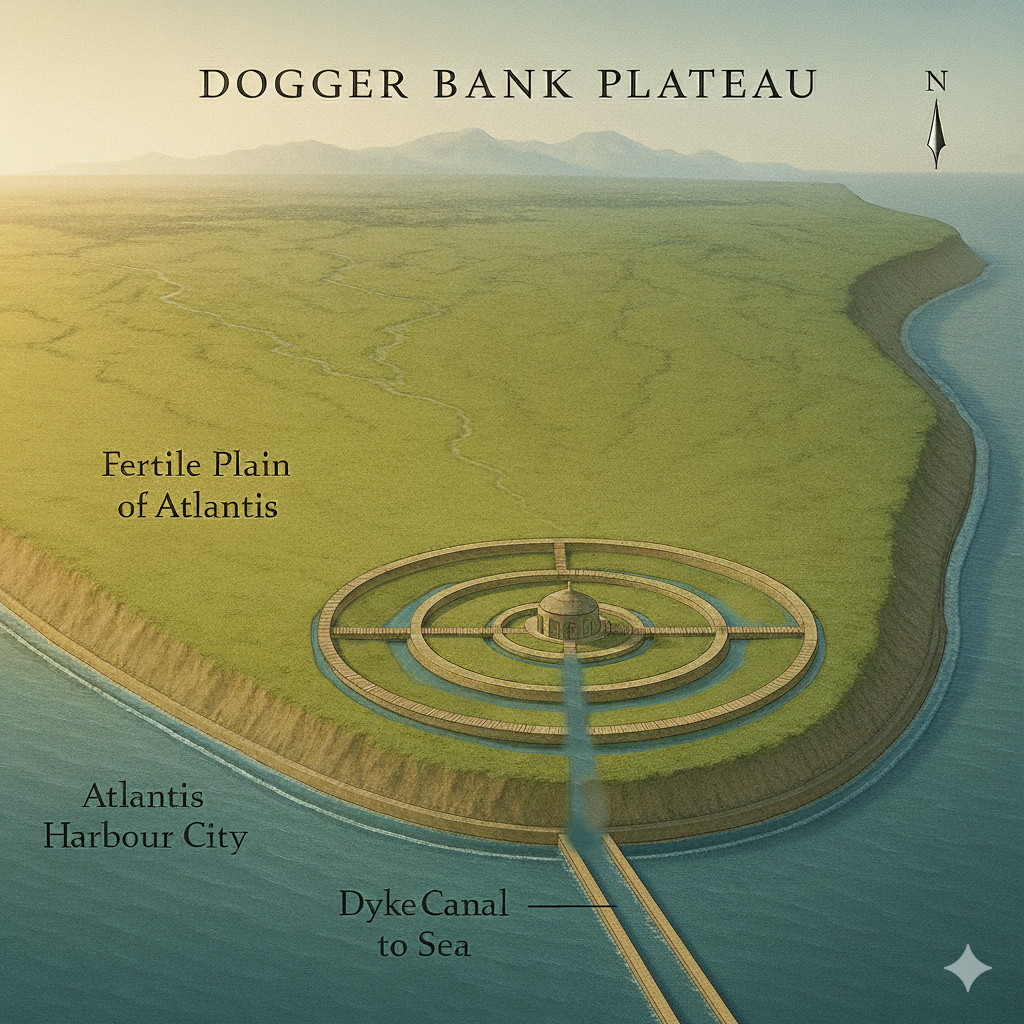
I’ve stopped here Alice’ because this bit is actually the most interesting part of the entire program you see obviously Stonehenge in its Glory at the top of the Avenue but what you also see and is not even mentioned in the program is the recumbent Stone in front of Dan snow which is known as the Slaughter Stone now the slaughter stone is probably the second most important Stone in the entire site because that stone and the stone in the middle known as the Altar Stone lines up in a direct path to a place called Doggerland – Doggerland is interesting because that is the birthplace of the Stonehenge Builders we call them the Megalithic Builders but that is their birthplace and one will imagine that as this is a temple to the dead and Doggerland sunk under the sea at basically the same time phase two of Stonehenge was built – I.E the large s of stones is it possible is it just remotely possible that they built this Temple for the dead to commemorate their island of Doggerland that was sunk into the sea just an idea.
He believed that he had found a sacred Avenue leading right into Stone Henge but what were those ancient people doing when they reached their destination inside the stone He was now obsessed and spent days and nights in and around the stones was then as he watched the sun rise and fall through its arches, he unlocked one of Stonehenge’s most incredible Secrets.
Stukeley noticed something spectacular on the summer solstice the longest day of the air and the Sun is highest in the sky the sun rose right above that stone there along the line of the Avenue and right through the middle of Stonehenge this couldn’t be an accident it had to be deliberate and that meant Stonehenge was designed around the movements of the sun today Skyscape archaeologist Fabio Sila is mapping the skies that our ancestors would have seen at Stonehenge to find out the precise astronomical alignments okay so Fabio what is a Skyscape archaeologist it sounds like the coolest job in the world it is a little bit we can use equipment like this to come here and take the measurements ourself put them on the computer open up a planetarium software that shows us what the sky looked like 5,000 years ago and put the sounds against that Sky the alignment of the Stars relative to the Earth has shifted slightly over the Millennia since Stone henge was first built Fabio’s finding out what the stone age Sky looked like right here back then so you can actually see the stars as they would have seen them that’s right yeah we can we can as close to what as they would have seen it as we as we can today yeah so stookie first chest’s place is solar aligned he he was right was he yeah absolutely was right so he mentioned the midsummer Sunrise alignment which is where the Avenue joins up with the Hench right where the Hillstone is cut Stonehenge in half two exactly equal parts and this line exactly matches the midsummer sunrise on one end and the midwinter sunset on the other these were Master Builders they knew their Ms they knew their astronomy they encoded everything they knew into this one place that’s why Stone age is unique and will never find anything like this all of this was over 4,000 years ago that’s just incredible to think about well it’s a bit cloudy but it is winter solers today so to prove just how skilled those ancient Stonehenge Builders were as we approach a gloomy Sunset Fabio has asked me to help him take some measurements
Hey Fabio what have we got hey let ass me their results let’s look at this O So what you’re seeing is is winter solstice around 2,500 BC that’s fantastic just as people would have seen it that is cool so this is 4 and a half thousand years ago this line here is the sun is it yes that’s the that’s the line the sun does on the day of the solers so we can see where it rises and then it’s going to set right in the middle of that window in the middle of stonehenge so cool you can well
Well Bob it looks like modern efficient technology has given us a precise date of the construction of Stonehenge which archaeologists call Phase 2 with the larger sarson Stones
Well it looks that way doesn’t it Alice but if you actually look very closely the sun’s actually not setting on the floor of this alignment in fact if you look closely it actually will set just behind the stone to the right and there’s a bit of a gap at the bot and you say well it’s not much of a gap but the Gap tells us a lot about the date of Stonehenge’s construction now the first thing to realize is that the sun moves about one degree every 5,000 years now half a degree is the diameter of the Sun so we can see there Gap is quite a substantial date change so the fact it actually doesn’t actually line correctly is interesting which would suggest that the date they’re going to promote is wrong
The second thing you should notice is where the alignment lines up with now at the moment we are just to the right of the slaughter stones though the slaughter stone you see in front of you on the left now the centre of the Avenue isn’t the slaughter Stone as we pointed out as you saw it’s actually a couple of feet to the right – now we’re not a couple of feet to the right we’re just by the side of the slaughter Stone otherwise if it was a couple of feet to the right of the sold Stone wouldn’t be in view so they’re cheating on the date.
Which is no surprise because we actually got the correct date which is 4,180 BCE and we know that because one of the stones has got an antler pick wedged against the side of the hole now archaeologists have tried to make excuses and this the antler is dated 4,300 BC they’re saying ah what happened they found a bit of old antler a thousand years old which was in really good condition – it’s like that when you leave a piece of antler around for a thousand years and they wedged it in by accident this can be easily confirmed by actually drawing a straight line down the middle of the Avenue and lining up to see where the sun sets and in what year. TV programs rather have professional looking with funny names running around with alignment scopes looking at sunsets from peculiar angles because it’s good television but very bad science.
Thousand years ago, people coming out this this processional room here and it would have just been in perfect alignment yeah that’s right it’s just the most extraordinary Monument is it the sophistication of that visitor experience marching up here on the shortest day of the year and seeing that alignment absolutely it’s Unique there’s nothing like this in the world 300 years ago Stonehenge’s solar alignment captivated people’s imagination.
As more and more visitors came and inspected the site there was a real hope that more of Stonehenge’s ancient Secrets would be unlocked but there was a problem with its popularity tourists were now beginning to put the stones themselves in danger they were coming here and clambering on them they were digging little holes around the place they were even shipping little pieces of the stones off and taking them home as souvenirs.
Then on the 3rd of January 1797, disaster struck; a group of Travelers was camping among the stones for some reason they dug a big hole at the base of one of them was already looking a bit precarious as the sun came up it and the ground soil became moist and with a great crash one of the stones fell over Bringing Down the Ring of stones like dominoes luckily, many of the stones remained standing but people worried the collapse of some of the Stone Circle might be the beginning of the end many feared that just as the secrets of Stonehenge were finally being rediscovered the ancient Monument was in danger of total collapse, the future looked Bleak
When you visit Stonehenge you realise that the Stone Circle itself is actually just a small part of a much larger ancient, more mysterious landscape dotted all around the hills that surround Stonehenge are mounds like these ones you can see three and there’s many more on the hills around me these are all a little bit different in shape and size but they all the same purpose they’re all burial mounds.
They’re called barrows these had been found right across the British Isles and treasure Hunters had been looting them for centuries so it was well known that they were used for barriers but nowhere had as many barrows as Stonehenge, and so Colt thought that if some of these barriers were undisturbed, he could excavate them and learn from the skeletons and the goods within them more about Stonehenge and unlock its
Secrets wasting no time the team began their archaeological assault on Stonehenge’s barrows their investigation was carried out with the speed and efficiency of a military operation; sometimes they would power through a whole Barrow in a single day after 5 years of slightly disappointing results they turned their attention to this spot just half a mile away overlooking the Magnificent Stone Circle.
Today it’s private land but I’ve been given special access still feel so magic so full of possibilities and it was in this mound here right on top of the hill that they would make the most extraordinary discoveries they called it Bush Baron thanks to a small tree on its side but there was nothing else particularly remarkable about this mound I imagine they approached it with trepidation with excitement as they always did when they started Excavating a new burial mound but they couldn’t have had High Hopes given their previous experience how wrong they would be with hundreds of excavated barrows under their belts the team tore through the soil after days of solid digging they reached the bottom and then at that moment they made the discovery of their lives at the base of this burial mound, they found an undisturbed human grave a tall Stout man laid out north to south, and the team gasped because around him was the most remarkable array of artefacts they had ever discovered Finally they had struck gold .
Today the Bush Barrow skeleton and his magnificent Treasures are held at the Wilshire Museum in devises so this gives you an impression of what they found yeah this is a reconstruction of his burial David Dawson has spent years unlocking the secrets of this incredible burial you can see he’s laid out in a Crouch position he’s got everything he needs everything that shows how important he is so clearly someone of great wealth and probably of prestige and power absolutely and what do we know about him I mean was he was he a tall man do we know how he died all we know is what the excavator said that he’s a stout and tall man and he also gives the length of his FEMA so he knows he’s a six-footer he’s a big chap.
Wow so the skeleton was 6t tall isn’t that unusually high for people of that period in Britain
Indeed Alice 6 feet is exceptionally high for the Bronze Age but not for the previous periods of the Neolithic and Mesolithic – because these people were exceptionally tall they were more 6′ six to 7 foot tall consequently looking at his height this may be a distant relative of the ancient ones and therefore his status was as a Chieftain of the tribe.
Now if we go back to the start of the video you saw the story of Stonehenge being built by Giants the question is when myth and reality mix you need to take a part of the myth because it’s real what we know is that the megalithic builders were very tall and very strong and we call them Cro-Magnons now these Cro-Magnons were seen as a separate species by the Victorians because like later immigrants to Britain they were somewhat smaller than the Cho-magnon and the average Victorian and bronze age person was about 5’6 we know that we got shorter as time went past because the average Roman was only 5’4 so when they looked at Cro-Magnons who was 6’9 they would ultimately call them Giants which is quite interesting because as you say Stonehenge myth is that they were built by Giants and Stonehenge was originally called the Giants Dance interestingly enough recent discoveries show that the blue stones don’t come from Ireland but come from Wows which is an amazing coincidence in a sense that is far to the west of Stonehenge almost on the other side of the water from Ireland.
He a six-footer he’s a big chap he’s tall the body is laid out with replicas of his personal items exactly as it was found 200 years ago and those treasured Goods reveal a person of incredible wealth and power and the Crown Jewel in this collection is this extraordinary piece of gold this decorative diamond shape that would probably have been worn on a cloak it’s not just beautifully crafted archaeologists have discovered something remarkable about it
They’ve worked out that the angles of the diamond inscribed on the surface precisely match the angle of the movements of the Sun at the summer and winter solers they discovered that if you place the diamond in the centre of Stonehenge at the winter solers you can use it like a compass if you align one side with the Setting Sun you can work out where the sun would set during the summer solers it’s 81° wow so and shows an understanding of astronomy and then you see the zigzag lines around the outside those are laid out to an accuracy of less than half a millimetre what that means is they understood geometry and Mathematics accurate measurement to be able to construct that they had to understand those 4,000 years ago that is astonishing isn’t it for the first time they were uncovering things which showed the sophistication of people at the time
With the discovery of the Bush Barrow burial we now had a glimpse of someone who’d actually known Stonehenge his golden Jewel suggests he was a sun worshipper maybe even the person who oversaw Stonehenge’s Solstice celebrations this man lived 4,000 years ago at the same time as the pharaohs ruled Egypt and he was more magnificent more wealthy and more sophisticated than anyone had ever imagined ancient Britain’s could be.
With such remarkable finds Stonehenge became more and more famous throughout the 19th century and so too did the visitors from Queen Victoria to Charles Dickens Arthur Conan Doyle to Charles Darwin but then disaster struck once again in in 1900 another of the giant Stones fell during a violent storm enough was enough Stonehenge might be privately owned but it was a National Treasure it needed to be protected and that meant putting up the stones that had fallen down and protecting those that remained standing they poured concrete around the bases they kept the lentils those horizontal arches fixed on top of the uprights using lead taken from the roof of Hampton Court Palace.
But the repairs gave archaeologists the chance to move in too they were determined to extract every piece of evidence they could by digging in and around the holes that have been left at the base of the stones that had fallen over they were going to sift through the soil layer by layer methodically and they didn’t find treasure at least not gold or other precious metals but they did find antlers charred wood and stone tools
The archaeologists concluded these were the ancient tools used to dig the ditch and shape the stones but there was a much bigger Revelation although metal had been found in the burials around Stonehenge there was no evidence of any metal tools buried in the monument Stonehenge had to have been built in the Stone Age it was an incredible breakthrough and the first step in solving the great mystery of when Stonehenge was built now 100 years later we can chart every phase of its construction from beginning to end.
So this is the I guess the first stone if you like what this this is 5,000 years ago yes absolutely what it’s showing us is the first things that happened in the space Heather sair is the head curator at Stonehenge they dug out a ditch and throw up a bank with the contents of the ditch slightly higher on the inside and lower on the outside so associated with the bank and ditch around the same period are 56 pits and we know they hold cremation burials but as well as that the the tops of the cremation burials were quite compressed so we’re fairly sure they held posts of some sort a lot of the academics who’ve done Recent research really do think they were probably blue stones so these could be the famous blue stones that are still on the site today absolutely.
So, the blue stones came from Wales and were used like gravestones for cremations is that right Bob
Well yes or no Alice, yes the blue stones definitely come from Wales and we’ve found their quarries, two quarries’ and we’ve carbon dated the quarries and they Mesolithic in date not Neolithic and it’s probably why they don’t talk about it on this program, one would imagine the quarry site is synonymous with Stonehenge and we should talk about that and it states but clearly this program doesn’t discuss the matter.
As for using them as gravestones absolutely and completely wrong what they found is cremations in the old holes which used to hold the blue stones and they’ come to this bizarre conclusion even though the evidence shows that not every hole has a cremation in fact there’s less than a dozen holes that have cremations within them and most those holes have had recesses cut into them for the cremations so the idea that they were made for Creations is a nonsense otherwise you won’t be carving holes in the side of the pits for the ashes it clearly something that’s happened after the stones have been removed which then asks the very interesting question well how long were the stones in the holes before they were removed now we know that these cremations in the blue stone holes have been carbon dated to 3,300 BCE the oldest dates on the site according to archaeologists now question is how long were these blue stones in the holes before they were chipped away or removed it could have been thousands of years gives credibility to the idea that basically this site is actually 5,000 years older than they’re telling you on this program.
So more STS come in but they’re much bigger this time that quite the chain so yes absolutely and what they did was they erected five in a horseshoe shape then they form a circle a Circle enclosing that horseshoe shape so it really is a feet of engineering so all of these stones or posts around the edge have gone haven’t they yes they have do you think they’ve taken the circle of blue stones and put them inside there is that I’m sure they would have used the same Stones so it now feels it’s all very much orientated towards the sunrise yes very much
So it’s been a bit remodelled I can see that these blue stones have been moved around a bit so the blue stones get put into a circle and really an oval there’s not major reconstruction at this time nothing has changed that will actually interfere with the source’s access so we’re fairly sure that that’s still very important so it’s 4, 200 years ago and how the Avenues here is this has this just been put in now yes indeed so really this Avenue you know if you imagine a processional away like the mile you know going up to Buckingham Palace it’s connected Stonehenge with the river so all the different elements seem to come together you’ve got the big Stones being built you’ve got the solar alignment you got the Avenue joining it to other things this feels like it’s Peak yes it is.
Bob the ditch that Dan just put his thumb around doesn’t look right as it is very bumpy why is it not perfect.
Well spotted Alice you’re quite right it’s very imperfect in fact the ditch isn’t a ditch most archaeologists don’t talk about the ditch and TV programs ignore it completely at least on the model they show there’s something underneath but it won’t tell you what because it then throws a light of confusion on what Stonehenge really was when it was first constructed the ditch is not a ditch it’s a series of pit holes here’s an illustration of what it looked like when it was excavated it’s still the greatest mystery of Stonehenge and it’s very rarely talked about.
It’s actually a series of holes with seats and there Stone holes at the bottom of the ditch why in Earth would that happen there’s only one single possibility which most archaeologists would like to avoid and TV programs again do not talk about it’s because once upon a time it was full of water because in the mesolithic the water table was much much higher and if you dug down a meter or two at Stonehenge it would immediately fill up with water, now this again allows us to date the site which shows it was 5,000 years older than that’s saying on this program and which most archaeologists believe.
And people used to bathe in the water and in the water is where they put the blue stone chips a little bit like bath Salts some of the holes have got large holes at the bomb so obviously large pieces of blue stone were placed at the bottom of the hole like a giant Barth salt now why they don’t want to talk about this is another matter we can go down this line of they put the temple together to worship the Sun but yet at the same time they were bathing and they were bathing their illnesses away because that’s what prehistoric people did and that’s what they carried on doing in throughout the Roman period and we know that because anybody goes down to Bath the reason the baths were there was for the same reason to bathe illness away and we even do it today in our own private little bath where we lay in the bath and throw some bath salts to make us feel good.
This precise dating of each phase from a simple bank and ditch to the big Stones arriving and then the construction of the Avenue has only been possible to work out recently because science back at the beginning of the 20th-century investigators were still beginning to feel more positive than ever about solving Stonehenge’s Mysteries until sudden 100 years ago Stonehenge’s future was suddenly thrown into doubt once again as it came into the firing line of the most devastating War the world had ever seen Stonehenge had a turbulent time, but after the war investigations picked up like never before now, archaeologists and Military Pilots began to work together, taking and sharing aerial photographs of this landscape in the hunt to understand Stonehenge and in 1926 that would result in an incredible
Discovery near to the monument look here just in this field here you can see this circular shape with lots of black dots there was something hidden buried in the ground analysing the photo in the 1920s the archaeologists were astonished the circle was almost exactly the same size as Stonehenge and the dots seemed to be symmetrically placed just like the stones at the monument just imagine how excited the archaeologist must have been when they entered this field were they about to discover the foundations of another Stonehenge just beneath their feet they started digging outside the main Circle soon became clear the dark circular impression was the remains of a ditch like the one at Stonehenge and next to it was a circular Bank I’m standing on it now this was almost exactly the same size as the one at Stonehenge 360 ft in diameter but it was when they started to dig inside the circle that they found something even more
intriguing fairly soon they found a pit which was exciting because they knew from Stonehenge the stones didn’t just sit on top of the ground they were sunk into them in p to make them far more solid so a pit here suggested a similar structure but this pit was smaller and there were residues of wood in it so archaeologists assumed that unlike Stonehenge this was made out of wood huge wooden posts stretching up out of the ground perhaps 20 metres High twice as high as the biggest stones in Stonehenge today this marks the sight of a pit but I should say pits because after finding that first one they went on to find pit after pit after pit until they realized that this was a whole landscape covered in 168 tall wooden columns soaring up to the sky visible for miles around and when the archaeologists looked at the layout of the monument they noticed something very familiar The Columns were aligned with the movements of the Sun so how was this Woodhenge connected to Stonehenge was it an early wooden prototype.
For 80 years no one had the answer until in 2004 a new investigation Finally Revealed the truth and it would revolutionise our understanding of Stonehenge a team from Sheffield University set up base here by Woodhenge and began to dig as they dug they revealed that there was a physical link between here and Stonehenge The Avenue at Stonehenge was connected to the river as it passed near Woodhenge the Avenue then picked up again this was clearly a route between the two monuments Stonehenge and Woodhenge was linked in the Stone Age but this amazing Discovery was just the start of their breakthroughs what they found next in the area by Woodhenge called Durrington walls was totally unexpected, and it was the real game changer as they dug their trenches right across this site they found layers of clay and on them burn marks it looked like people have been gathering around fires to the trained eye of archaeologist it seemed likely that these were hearths and that they had found Stone Age houses.
But as they realized the extent of the finds it became clear that this was a whole Stone Age Village to see how our ancient ancestors lived a replica of one corner of this rare Discovery has been recreated near Stonehenge look I love how picturesque and cosy the little Hamlet feels very different to the Stark Stone of stone Heng well these are your classic Watt and dorb houses this is the way that most people in Britain lived up until about 500 years ago Mike Parker Pearson led the team who discovered the houses.
What you what we’ve got it’s very simple construction that you have a screen of wood and then plaster against it WT and orb and then you have reads to build the roof that’s amazing they’re all different aren’t they they’re not all built to one particular why that what was really interesting is that they actually form a module a group although each of them was a habitation with beds they had slightly different purposes that’s the main house the storehouse around the corner we’re standing just behind the Cook House okay and that’s the workshop so uh they’re all working together as a single unit Mike believes that each cluster of buildings was probably home to 15 to 20 people all working together possibly extended families he believes that the whole Stone Age site would have been densely packed with groups like this we have maybe a thousand houses yes so this would have been perhaps the biggest settlement in the whole of Britain.
Wow and that do you think that’s because of Stonehenge undoubtedly the date for the occupation of this great settlement is the same as the second stage of Stonehenge when the really big sass went up so my guess is that this would have been where the building crew were actually living that’s almost a stone age city as a result of the excavations Mike has come up with an exciting new Theory the houses were found next to Woodhenge could that mean that together they were a place for the living and Stonehenge was a ceremonial sight for the dead it all seems to fit together quite nicely Stonehenge was the place where the people living down at Woodhenge could come and commemorate their ancestors at the summer and winter solers people would begin to gather at the Durrington walls town next the wood henge before making their way up the sacred Avenue to Stone hedge where they would celebrate their ancestors at special times in the year isn’t that incredible
Bob, we have found a whole new prehistoric City with thousands of houses just down the road from Stonehenge, which must be where the builders lived when constructing the site incredible
Yes but I would probably pull it down to be more delusional the 1,000 houses that the experts are quoting in come from just five houses found in an excavation outside Durrington walls at the entrance which should ask you a question if the houses are in a city surely the houses should be inside the city rather than on the walkway leaving the city but this sort of exaggeration is Common Place sadly nowadays in archaeology headlines of the fashion if they find five houses which to be honest is no big deal – it suddenly becomes a thousand house City because it gets better publicity than we just found five houses this is in fact very poor science what we found is five houses only two we know that are inhabited by someone the others have just halves on the floor so it could be anything the interesting aspect of it is that the shape of the house has changed they’ve told us in the past that everybody lived in round houses these are not round these are square with round corners so it’s very new and it just illustrates that archaeologists are just guessing when it comes to discoveries they haven’t really got a grip with our true history and at the moment they’re taking pot shots of ideas hoping that some of them will stick and that some of them will find other evidence in the future.
What we see in front of us at Durrington Walls is actually not a 1000 house site it’s actually a harbour in fact Durrington Walls isn’t a henge as it’s categorised because it doesn’t have a ditch and bank which is the normal criteria for a henge it’s actually a natural harbour made by the water as we can see very clearly on this liar map sadly archaeologists don’t use liar it’s the most advanced tool in archaeology why archaeologists don’t use this most sophisticated of tools on a day-to-day basis I just don’t understand this tool allows us to look at the landscape in great detail which is much much better than field walking because you have a different perspective from the sky and even Satellite photographs which to be honest is no good because it’s covered in foliage so you cannot see the detail as you see from this illustration the site is carved into the side of the landscape and that was due to the Waters of the mesic when the river Avon which is Tiny in comparison there was large and extensive and would have cut the chalk away from the side of the Durrington wall site carving out a natural harbour which people would have used with their boats.
But then the surprise discovery of an ancient skeleton would reveal an even bigger story, putting Stonehenge at the centre of the ancient world and when the homes of Stonehenge’s ancient inhabitants were discovered in 2004 archaeologists found evidence of scraps of food perfect for scientific analysis and it revealed something incredible there were traces of hazelnuts fruit honey even a sort of ancient cheese is a bit like mozzarella but there was one thing that dominated the menu there are tens of thousands of pig bones from the site about 90% of all the bones that were found there are from pigs so they really like their pork archaeologist Richard matwick analysed the food and was fascinated by the amount of pig being consumed in his experience this didn’t look like an everyday menu these were huge feasting events in my opinion not only because of the volume of material but also because of the volume of pigs because pigs are good feasting animals you can kill large numbers without harming what we call a secondary product economy.
So if you rely on milk if you rely on wool you don’t want to kill large quantities of cattle and and sheep in one go because you’ll have nothing to live on afterwards but pigs don’t don’t have those products and therefore they’re very well suited to feasting well so we can imagine that people at dint WS they’re there for a party and there’s just a huge pig base like the end of an asterisk book yeah I think you can think of it a bit like that Richard now began analysing chemicals in the pig bones called Isotopes these would help him work out where the pigs had come from so if we’re prepared to sacrifice a tiny fragment of a pig tooth 20 Mig of an can you see that cut there to that in half yeah exactly uh that is an archive of lots of important information about where the animal came from what its diet was like and how it lived.
So every time we consume food and drink and animals consume food and drink chemical signals from those products enter the body and ultimately and thankfully for archaeologists end up in our bones and teeth so what so you can kind of identify where these animals are from to some degree we can so if I can show you a graph so we can see this Square down here is the chalkland and the green s of of Wessex around the area of Durrington walls and these blue diamond’s here are the Durrington walls pigs so lots of them are coming from Fairly nearby lots of them are coming from Fairly nearby these that are below the 709 line and just above the 709 line they’re consistent with being local but the science also shows that pigs were being brought here from further away but you can see we have got large numbers that are higher much higher up in the map 710 711 all the way up to 717 now these are really high values and it it clearly points to the animals having come from a wide range of different locations different geological zones certainly Wales certainly Southwest England and certainly the Eastern Seaboard as well so people are coming from a long long way and they’re bringing their pigs with them wow the pig bones revealed that Stonehenge was not only celebrated with a massive communal feast but was the heart of a vast prehistoric Network drawing crowds from right across the land but what about the origins of the actual people who were coming here at that time 3 and a half thousand years ago.
In 2002 a chance Discovery was about to reveal an extraordinary clue just three miles from Stonehenge lies the town of Amesbury 20 years ago a brand new school was being built here but just as construction started work was suddenly halted anytime that anyone tries to build something new around here they have to be very careful indeed because we’re so close to Stonehenge that there is very likely to be precious archaeology just beneath the surface off so when they were building this school 20 years ago archaeologists were on hand for every single moment and it’s lucky they were because just over there where that playing field now is they discovered one of the most important one of the richest burials ever found in Britain the Amesbury Archer.
I’ve come to Salsbury where the skeleton and his extraordinary great Brave goods are on display this is one of the most significant prehistoric finds ever made in Europe it’s an adult male around 35 to 45 he was 5′ 8 tall missing a KNEe cap so he’d have walked with a limp he’s buried with his beakers there he might have drunk beer out of and an extraordinary Rich array of other objects laid out around him he’s got arrow heads and he’s got a wrist protector just here so that the string from the bow doesn’t graze him as he releases it and he’s been named as the Amesbury Archer as a result but the Archer had something else buried alongside him and it’s what makes this individual truly exciting alongside the archery equipment very unusually is this might not look like much but it is a portable Anvil a stone which he would have used to shape metal you can see examples of the sort of work he might have done just here these golden ornaments possibly used in hair to tie up braids and also you’ve got copper knives these gold and bronze objects are the oldest ever found in Britain which means the Asbury Archer could be one of our first metal workers other finds in the grave are equally intriguing lying around him were five Pottery cups called Bell beakers because of their bell-like shape this style wasn’t local it came from the continent archaeologists were very keen to find out where this trailblazing individual might have come from and luckily they now had the scientific tools to do just that.
I’m heading to the Natural History Museum in London where scientists have been analysing the Asbury archer in extraordinary detail so Selena you’ve got this mysterious character he’s absolutely dripping with all the new technology and Cool Stuff who is he what have you boffin’s been able to unlock about him so yeah we actually know quite a lot about this individual he’s a really interesting chat Selena brace is an expert in discovering the secrets of our ancient ancestors from minute information stored in their bones and teeth the Amesbury Archer is full of a wealth of data about where he came from well there’s lots of different lines of evidence U that we can use to uh explain more about who the Asbury Archer was one of the lines of evidence that we look at is isotope analyses so they looked at the Isotopes in his teeth it’s the same science that showed us earlier that the slaughtered pigs came from all over Britain by looking at chemicals in human teeth you can also find out where someone grew up so what’s all that telling us so what this actually tells us is that his the signature that we see in his teeth is not what you would expect from Britain oh so where’s he from well it looks like sort of Central Europe Germany Hungary Austria but he probably grew up in the Alps so he’s migrated from the Alps to be buried in Amesbury
Wow much nicer climate I don’t blame him well we think that he must have just migrated here probably with the community uh a whole group of people because this is a Time point when we see a lot of migration happening in Europe and a lot of people migrating into Britain at this time wow so even we think the modern world were all travelling around lots of migration going on but actually this was people moving across Europe even thousands of years ago yeah I mean this was what so he died 3,200 BC so and yeah there’s a huge sways of people moving around Europe bringing different cultures exchanging ideas yeah it’s a pretty active time point with the discovery of the Archer’s Continental Origins his extraordinary burial goods made much more sense metal working developed in Europe before arriving in Britain those jars called Bell beakers were also a continental Style the idea of traveling many hundreds of miles to come here it’s just remarkable and if people were making that big trick it implies that news of Stone Hedge must have spread far and wide
So we have stones from Wales pigs from East Anglia and now archers from the Alps so how did they get to Stonehenge and how did they know Stonehenge actually existed in the first place?
That indeed is a great question Alice how on Earth did people in the Alps knew there was a place called Stonehenge and why would you even attempt to undertake that Journey unless there’s some very very good reason now one thing the prob never mentioned is the fact that the AMC Archer had a kneecap missing and had a waivered leg this person doesn’t travel easy this person travels very badly this person would have to can’t walk obviously to St inch even if he knew where it was he would have to go by cart there’s no carts in those days there’s no roads in those days there’s no signposts in those days there’s no friendly villagers to say oh do you know where Stonehenge is particularly when you get halfway through France it’s a nonsense of history that people would know where Stonehenge was and where it was located the only way you can actually achieve a knowledge of where something was if there’s somebody on a regular basis traveling to your village or traveling to your town who tells you stories of where they’ve been in the past now that won’t be through walking and this won’t be through migration as the archaeologists and history books would tell you we’ve seen this in the past and this sort of communication on a constant basis happens when people trade when people in the past have traded via ships we’ve gone off to far distant Islands picked up and traded with far distant people come back tell stories of potatoes and tobacco and gone back again to trade with them and people have gone with those Traders because of the stories to say oh that sounds great i’ like to go and see those wonderful sites you tell stories for I’ll come with you
This is our natural way of communication this is how cultures intermingle this is how trading happens and it’s people going on trade routes so if people have come to Stonehenge it’s because it’s on a trading route and this very crucial piece of information has always been missed in our history and Stonehenge is classic case of someone coming to Stonehenge probably to B if we saw before because he’s ill and he hasn’t got a kneecap and he’s got a waivered leg he’s come to try and cure himself from a far distant country because he’s heard of this from the trading route and what we also know is that we traded in the Alps for other things such as Jade – Jade axes found a thousand years before the Amesbury Archer has been coming from the Alps so we’ve had regular contact on these trading routes sadly this information which is crucial for the understanding of Stonehenge and its history is missing from this program.
Modern science has transformed our understanding of Britain’s most iconic Monument but until very recently, there was still one very big question that had never been answered where did the biggest Stones themselves come from in 2017 that mystery was finally about to be solved but one of the greatest Mysteries still remain where did the biggest Stones the sarsens that that form these iconic arches actually come from investigators had never got close to revealing the truth until now when a lost piece of evidence emerged archaeologist Sue greeney was part of the team given this incredible opportunity to identify the exact spot where stonehenge’s largest sarson Stones came from.
So how how on Earth do you work out where a stone is from well actually sarson are really really tricky to tell where they’re from suris because if you look at sarson inside it’s just like sand it just looks like solidified sand okay that’s because it’s more than 99% silica so um actually you have to use geochemistry you have to take a sample and you have to look at the trace elements everything that’s not silica in order to be able to match it it’s sort like a fingerprint or a signature so you’re just looking at the chemical composition of the stone using very wizzy technology by matching the chemical signature of these Mammoth stones with the identical Fingerprints of ones found naturally in the landscape scientists hoped they could work out where these Stones originally came from before they were set up at Stonehenge but they had a big problem they really needed a stone sample and that would mean hacking out a piece and destroying a bit of this precious Monument the destroyed bit I can imagine is tricky with Stonehenge yes we don’t want to be drilling into the stones here at Stonehenge.
But back in the 1950s Engineers had done exactly that to stop this Stone from cracking they drilled a hole and pinned it together the core they removed was taken away to the United States by one of the team and forgotten until 2017 when it was returned out of the blue
oh wow look at this and here wow in this perspect tube is the core so it’s about a meter long section complete cross-section through the stone and if you look at it you can see it’s kind of like layers of sand it’s a bit like one of those things you buy as a souvenir on the beach on the beach yeah that’s perfect isn’t it uh and this bit here is where a little piece of it was sent away for destructive analysis so that we could look at the chemistry of this particular Stone in detail and you don’t feel like you’re desecrating ancient site do you ex it’s already been taken out finally Sue and the team had something they’d only ever dreamed of a sample it could send to the lab and analyse its chemical signature but now came the difficult part they were going to have to scour the countryside to find a match they started searching within a 10m radius of stone henge Susan is taking me on a trip through Wilshire to retrace their steps it’s soon clear why this was such a mammoth task the area is littered with natural Sasson Stones so these are Stones they the S Stones R to Sea they’re not this is a natural sarson spread sometimes called an assassin River and this is exactly what how it occurs here they’re quite small um but this would have been a common sight across lots of bits of of this part of Wilshire but when these Stones were sampled their chemical signatures didn’t quite match Stone henges precisely enough the hunt was still on for a better match wow right let’s keep going this up here up to the right here the investigation now took the archaeologist deep into West Woods 8 mil from Stonehenge this is where they’d make their breakthrough so I’m starting to see Stones poking up through the surface yeah we’ve got just a few of them here there’s a few aren’t there there’s some big ones up ahead
oh yeah fantastic that’s good some good size I mean that one you could almost make a lentil out of couldn’t you these stones were around the right size to be candidates for the ones chosen for Stonehenge the archaeologists began to analyse them could this be the exact spot where Stone’s Mighty Stones originally came from around 4 and a half thousand years ago the archaeologist carried out preliminary field tests this is a machine that scans beneath the surface to identify the chemical composition of any material metal wood or stone it basically is an x-ray machine we just turn it on and we place it near to the surface that we want to analyse and fire it away and then we just place it against The Rock and we just take the reading and it’s done and we can look at that back in the lab and download the data and yeah you can just see here a little graph of the reading we’ve just taken and so we’ve got that graph for the stones at Stonehenge yes and if it’s the same graph then the stones are from the same place yes when the archaeologists first analysed everything in the lab the results were remarkable so the sample that was taken from West woods which is where we are was the closest match to that signature that wiggle matching of all the chemical composition of the SARS and stones at Stonehenge and so the scientist were happy that the sassin from Stonehenge came from here it’s an amazing Discovery proving that 4 and a/ half thousand years ago the Builders of Stonehenge came right here to this exact spot in Westwood to choose the biggest and best stones for their great creation Sue’s team could now work out the route they travelled to Stonehenge these 20 ton stones were dragged from Westwood over 8 mil of rough terrain out of this wood downhills alongside the river then uphill to their final destination on Salsbury plane the scale of the operation was incredible.
I have this strangest feeling you’re going to tell me this is also not true
Well Alice once again yes and no yes the big S Stones did come from West woods or around West woods but no not all of the stones come from West woods and the fact that some of the very largest Stones the trilithon stones which are 25 tons came from much further field from both Hampshire and Sussex that tells us a little bit more about Stonehenge and this idea of dragging Stones across land which there still trying to push upon the viewer we even look at the 8 Mile very simple Crossing between West woods and Stonehenge as shown on this profile map you see it’s not as clear as Dan would suspect up a hill and down a hill dragging the stone no indeed you’ve got to go past what’s known as two very large rivers best will in the world you cannot drag a stone through a river and one of the rivers is the Avon and that will be at least 18 to 20 metres wide the chances are that you would probably drown if you try to do so all the stone will be swept away Downstream you’ll have to build a boat to take it across these rivers and if you’ve got a boat for the stone why would you want to drag it you could floated it down from where they found it because there’s Rivers by westwards there’s also a manmade structure a linear earthwork known as Wansdyke now people don’t understand what was Wansdyke and the age of on stake but strangely enough it connects to Two Rivers from one end to the other and it goes through West woods what’s the chances that someone built it to take the stone from Westwood all the way down to Stonehenge but that’s another story which sadly this documentary will not cover they just want you to believe people drag Stones across land.
Looking at the profiles of the Hampshire and Sussex maps showing the path of these gigantic Stones it is clear that you need a boat to take it and what you have seen over the last hour is the theme of boats people coming from Abroad in boats Stones being taken to sites by boats animals coming for Slaughter and feasting by boats are Central to the understanding of Stonehenge but it’s not Central to the understanding of archaeology today currently
It’s just extraordinary to think that over 4 and a half thousand years ago our Stone Age ancestors were foraging in some Woodland when they came across these Mighty Stones they decided to shape them and dig them up and transport them here and then erect them into this huge monument and then for centuries afterwards people from across Britain that as far fielders in Europe perhaps came here to visit and even now then yet later it’s drawing bigger crowds than ever Stonehenge’s discoveries are remarkable they’ve revealed when it was built 4 and a half thousand years ago they’ve revealed the extraordinary story of how it was built dragging those Mighty Stones here carefully shaping and erecting them to align precisely with the movements of the sun then creating that Avenue linking it to Woodhenge and that vast Stone Age village and discovering what it was used for thousands came here to celebrate the summer and winter solstice for over a thousand years journeying across the seas and the country burying their dead around it’s taken three centuries armies of archaeologists investigations from the high and looking under the ground it’s taken the latest scientific techniques and yet now finally it feels like we’ve unlocked some of Stonehenge’s most important Secrets it’s still one of the greatest one of the most magical archaeological sites on Earth there is no longer quite as much of a mystery well that’s all we got time for you today.
I hope you enjoyed the video and a little chat about archaeology come to our website where you can find essays and liar investigations or come and visit us on YouTube where we have a video channel where we have more videos for you to browse so it’s goodbye from me and it’s goodbye from Alice
Author’s Biography
Robert John Langdon, a polymathic luminary, emerges as a writer, historian, and eminent specialist in LiDAR Landscape Archaeology.
His intellectual voyage has been interwoven with stints as an astute scrutineer for governmental realms and grand corporate bastions, a tapestry spanning British Telecommunications, Cable and Wireless, British Gas, and the esteemed University of London.
A decade hence, Robert’s transition into retirement unfurled a chapter of insatiable curiosity. This phase saw him immerse himself in Politics, Archaeology, Philosophy, and the enigmatic realm of Quantum Mechanics. His academic odyssey traversed the venerable corridors of knowledge hubs such as the Museum of London, University College London, Birkbeck College, The City Literature Institute, and Chichester University.
In the symphony of his life, Robert is a custodian of three progeny and a pair of cherished grandchildren. His sanctuary lies ensconced in the embrace of West Wales, where he inhabits an isolated cottage, its windows framing a vista of the boundless sea – a retreat from the scrutinous gaze of Her Majesty’s Revenue and Customs, an amiable clandestinity in the lap of nature’s embrace.
Exploring Prehistoric Britain: A Journey Through Time
My blog delves into the fascinating mysteries of prehistoric Britain, challenging conventional narratives and offering fresh perspectives grounded in cutting-edge research, particularly LiDAR technology. I invite you to explore some key areas of my research. For example, the Wansdyke, often cited as a defensive structure, is re-examined in light of new evidence. I’ve presented my findings in my blog post Wansdyke: A British Frontier Wall – ‘Debunked’, and aWansdyke LiDAR Flyover video further visualises my conclusions.
My work also often challenges established archaeological dogma. I argue that many sites, such as Hambledon Hill, commonly identified as Iron Age hillforts, are not what they seem. My posts Lidar Investigation Hambledon Hill – NOT an ‘Iron Age Fort’ and Unmasking the “Iron Age Hillfort” Myth explore these ideas in detail and offer an alternative view. Similarly, sites like Cissbury Ring and White Sheet Camp also receive a re-evaluation based on LiDAR analysis in my posts “Lidar Investigation Cissbury Ring through time” and “Lidar Investigation White Sheet Camp,“ revealing fascinating insights into their true purpose. I have also examined South Cadbury Castle, often linked to the mythical Camelot56.
My research also extends to ancient water management, including the role of canals and other linear earthworks. I have discussed the true origins of Car Dyke in multiple posts, including Car Dyke – ABC News Podcast and Lidar Investigation Car Dyke – North Section, which suggest a Mesolithic origin 2357. I also explore the misidentification of Roman aqueducts, as seen in my posts on the Great Chesters (Roman) Aqueduct. My research has also been greatly informed by my post-glacial flooding hypothesis, which has helped explain landscape transformations over time. I have discussed this hypothesis in several posts, including AI now supports my Post-Glacial Flooding Hypothesis and Exploring Britain’s Flooded Past: A Personal Journey
Finally, my blog also investigates prehistoric burial practices, as seen in Prehistoric Burial Practices of Britain and explores the mystery of Pillow Mounds, often mistaken for medieval rabbit warrens, but with a potential link to Bronze Age cremation in my posts: Pillow Mounds: A Bronze Age Legacy of Cremation? and The Mystery of Pillow Mounds: Are They Really Medieval Rabbit Warrens?. My research also includes astronomical insights into ancient sites, for example, in Rediscovering the Winter Solstice: The Original Winter Festival. I also review new information about the construction of Stonehenge in The Stonehenge Enigma.
Further Reading
For those interested in British Prehistory, visit www.prehistoric-britain.co.uk, a comprehensive resource featuring an extensive collection of archaeology articles, modern LiDAR investigations, and groundbreaking research. The site also includes insights and excerpts from the acclaimed Robert John Langdon Trilogy, a series of books that explore Britain during the Prehistoric period. Titles in the trilogy include The Stonehenge Enigma, Dawn of the Lost Civilisation, and The Post-Glacial Flooding Hypothesis, which offer compelling evidence of ancient landscapes shaped by post-glacial flooding.
To further explore these topics, Robert John Langdon has developed a dedicated YouTube channel featuring over 100 video documentaries and investigations that complement the trilogy. Notable discoveries and studies showcased on the channel include 13 Things that Don’t Make Sense in History and the revelation of Silbury Avenue – The Lost Stone Avenue, a rediscovered prehistoric feature at Avebury, Wiltshire.
In addition to his main works, Langdon has released a series of shorter, accessible publications, ideal for readers delving into specific topics. These include:
- The Ancient Mariners
- Stonehenge Built 8300 BCE
- Old Sarum
- Prehistoric Rivers
- Dykes, Ditches, and Earthworks
- Echoes of Atlantis
- Homo Superior
- 13 Things that Don’t Make Sense in History
- Silbury Avenue – The Lost Stone Avenue
- Offa’s Dyke
- The Stonehenge Enigma
- The Post-Glacial Flooding Hypothesis
- The Stonehenge Hoax
- Dawn of the Lost Civilisation
- Darwin’s Children
- Great Chester’s Roman Aqueduct
- Wansdyke
For active discussions and updates on the trilogy’s findings and recent LiDAR investigations, join our vibrant community on Facebook. Engage with like-minded enthusiasts by leaving a message or contributing to debates in our Facebook Group.
Whether through the books, the website, or interactive videos, we aim to provide a deeper understanding of Britain’s fascinating prehistoric past. We encourage you to explore these resources and uncover the mysteries of ancient landscapes through the lens of modern archaeology.
For more information, including chapter extracts and related publications, visit the Robert John Langdon Author Page. Dive into works such as The Stonehenge Enigma or Dawn of the Lost Civilisation, and explore cutting-edge theories that challenge traditional historical narratives.
Other Blogs
1
a
- AI now Supports – Homo Superior
- AI now supports my Post-Glacial Flooding Hypothesis
- Alexander the Great sailed into India – where no rivers exist today
- Ancient Secrets of Althorp – debunked
- Antler Picks built Ancient Monuments – yet there is no real evidence
- Antonine Wall – Prehistoric Canals (Dykes)
- Archaeological ‘pulp fiction’ – has archaeology turned from science?
- Archaeological Pseudoscience
- Archaeology in the Post-Truth Era
- Archaeology: A Bad Science?
- Archaeology: A Harbour for Fantasists?
- Archaeology: Fact or Fiction?
- Archaeology: The Flaws of Peer Review
- Archaeology’s Bayesian Mistake: Stop Averaging the Past
- Are Raised Beaches Archaeological Pseudoscience?
- Atlantis Found: The Mathematical Proof That Plato’s Lost City Was Doggerland
- ATLANTIS: Discovery with Dan Snow Debunked
- Avebury Ditch – Avebury Phase 2
- Avebury through time
- Avebury’s great mystery revealed
- Avebury’s Lost Stone Avenue – FREE Flipbook
b
- Battlesbury Hill – Wiltshire
- Beyond Stone and Bone: Rethinking the Megalithic Architects of Northern Europe
- BGS Prehistoric River Map
- Blackhenge: Debunking the Media misinterpretation of the Stonehenge Builders
- Brain capacity (Cro-Magnon Man)
- Britain’s First Road – Stonehenge Avenue
- Britain’s Giant Prehistoric Waterways
- British Roman Ports miles away from the coast
c
- Caerfai Promontory Fort – Archaeological Nonsense
- Car Dyke – ABC News PodCast
- Car Dyke – North Section
- Car Dyke Atlas – Prehistoric Canals – FREE Flipbook
- CASE STUDY – An Inconvenient TRUTH (Craig Rhos Y Felin)
- Case Study – River Avon
- Case Study – Woodhenge Reconstruction
- Chapter 2 – Craig Rhos-Y-Felin Debunked
- Chapter 2 – Stonehenge Phase I
- Chapter 2 – Variation of the Species
- Chapter 3 – Post Glacial Sea Levels
- Chapter 3 – Stonehenge Phase II
- Chapter 7 – Britain’s Post-Glacial Flooding
- Cissbury Ring through time
- Clement Reid, Doggerland, and the Archaeological Establishment
- Cro-Magnon Brain Capacity
- Cro-Magnon Megalithic Builders: Measurement, Biology, and the DNA
- Cro-Magnons – An Explainer
d
- Darwin’s Children – Flipbook
- Darwin’s Children – The Cro-Magnons
- Dawn of the Lost Civilisation – FREE Flipbook
- Dawn of the Lost Civilisation – Introduction
- Digging for Britain – Cerne Abbas
- Digging for Britain Debunked – Cerne Abbas 2
- Digging Up Britain’s Past – Debunked
- DLC Chapter 1 – The Ascent of Man
- Durrington Walls – Woodhenge through time
- Durrington Walls Revisited: Platforms, Fish Traps, and a Managed Mesolithic Landscape
- Dyke Construction – Hydrology 101
- Dykes Ditches and Earthworks
- DYKES of Britain
e
f
g
h
- Hadrian’s Wall – Military Way Hoax
- Hadrian’s Wall – the Stanegate Hoax
- Hadrian’s Wall LiDAR investigation
- Hambledon Hill – NOT an ‘Iron Age Fort’
- Hayling Island Lidar Maps
- Hidden Sources of Ancient Dykes: Tracing Underground Groundwater Fractals
- Historic River Avon
- Hollingsbury Camp Brighton – A Hillfort… or a Forgotten Harbour?
- Hollows, Sunken Lanes and Palaeochannels
- Homo Superior – Flipbook
- Homo Superior – History’s Giants
- How Lidar will change Archaeology
- Hydrology 101 Simplified: Why Britain’s Dykes Worked Without Rivers
i
l
m
- Maiden Castle through time
- Mathematics Meets Archaeology: Discovering the Mesolithic Origins of Car Dyke
- Mesolithic River Avon
- Mesolithic Stonehenge
- Minerals found in Prehistoric and Roman Quarries
- Mining in the Prehistoric to Roman Period
- Mount Caburn through time
- Mysteries of the Oldest Boatyard Uncovered
- Mythological Dragons – a non-existent animal that is shared by the World.
o
- Offa’s Dyke – FREE Flipbook
- Old Sarum Lidar Map
- Old Sarum Through Time…………….
- On Sunken Lands of the North Sea – Lived the World’s Greatest Civilisation.
- OSL Chronicles: Questioning Time in the Geological Tale of the Avon Valley
- Oswestry LiDAR Survey
- Oswestry through time
- Oysters in Archaeology: Nature’s Ancient Water Filters?
p
- Pillow Mounds: A Bronze Age Legacy of Cremation?
- Pinkery Canal
- Plato Was Right: The Archaeological Evidence the Academics Never Expected
- Post Glacial Flooding – Flipbook
- Prehistoric Burial Practices of Britain
- Prehistoric Canals – Wansdyke
- Prehistoric Canals – Wansdyke
- Prehistoric Canals (Dykes) – Great Chesters Aqueduct (The Vallum Pt. 4)
- Prehistoric Canals (Dykes) – Hadrian’s Wall Vallum (pt 1)
- Prehistoric Canals (Dykes) – Offa’s Dyke (Chepstow)
- Prehistoric Canals (Dykes) – Offa’s Dyke (LiDAR Survey)
- Prehistoric Canals (Dykes) – Offa’s Dyke Survey (End of Section A)
- Prehistoric Canals (Dykes) – Wansdyke (4)
- Prehistoric Canals Wansdyke 2
- Professor Bonkers and the mad, mad World of Archaeology
r
- Real-World Confirmation of Post-Glacial Flooding
- Rebirth in Stone: Decrypting the Winter Solstice Legacy of Stonehenge
- Rediscovering the Winter Solstice: The Original Winter Festival
- Rethinking Ancient Boundaries: The Vallum and Offa’s Dyke”
- Rethinking Ogham: Could Ireland’s Oldest Script Have Begun as a Tally System?
- Rethinking The Past: Mathematical Proof of Langdon’s Post-Glacial Flooding Hypothesis
- Rising Evidence, Falling Rivers: The Real Story of Europe’s First Farmers
- Rivers of the Past Were Higher: A Fresh Perspective on Prehistoric Hydrology
s
- Sea Level Changes
- Section A – NY26SW
- Section B – NY25NE & NY26SE
- Section C – NY35NW
- Section D – NY35NE
- Section E – NY46SW & NY45NW
- Section F – NY46SE & NY45NE
- Section G – NY56SW
- Section H – NY56NE & NY56SE
- Section I – NY66NW
- Section J – NY66NE
- Section K – NY76NW
- Section L – NY76NE
- Section M – NY87SW & NY86NW
- Section N – NY87SE
- Section O – NY97SW & NY96NW
- Section P – NY96NE
- Section Q – NZ06NW
- Section R – NZ06NE
- Section S – NZ16NW
- Section T – NZ16NE
- Section U – NZ26NW & NZ26SW
- Section V – NZ26NE & NZ26SE
- Silbury Avenue – Avebury’s First Stone Avenue
- Silbury Hill
- Silbury Hill / Sanctuary – Avebury Phase 3
- Sky Maps of Prehistoric Britain
- Somerset Plain – Signs of Post-Glacial Flooding
- South Cadbury Castle – Camelot
- Statonbury Camp near Bath – an example of West Wansdyke
- Stone me – the druids are looking the wrong way on Solstice day
- Stone Transportation and Dumb Censorship
- Stonehenge – Monument to the Dead
- Stonehenge Hoax – Dating the Monument
- Stonehenge Hoax – Round Monument?
- Stonehenge Hoax – Summer Solstice
- Stonehenge LiDAR tour
- Stonehenge Phase 1 – 8300 BCE Documentary
- Stonehenge Phase 1 — Britain’s First Monument
- Stonehenge Phase I (The Stonehenge Landscape)
- Stonehenge Solved – Pythagorean maths put to use 4,000 years before he was born
- Stonehenge Through Time
- Stonehenge, Doggerland and Atlantis connection
- Stonehenge: Borehole Evidence of Post-Glacial Flooding
- Stonehenge: Discovery with Dan Snow Debunked
- Stonehenge: The World’s First Computer – FREE Flipbook
- Stonehenge: The Worlds First Computer
- Stonehenge’s The Lost Circle Revealed – DEBUNKED
t
- Ten Reasons Why Car Dyke Blows Britain’s Earthwork Myths Out of the Water
- Ten Things You Didn’t Know About Britain’s Prehistoric Flooded Past
- Ten thousand year old boats found on Northern Europe’s Hillsides
- Ten thousand-year-old boats found on Northern Europe’s Hillsides
- Testing Plato’s Atlantis Against Reality
- The “Hunter-Gatherer” Myth: Why It’s Time to Bury This Outdated Term
- The Ancient Mariners – Flipbook
- The Ancient Mariners – Prehistoric seafarers of the Mesolithic
- The Ascent of Man — From Survival to Systems
- The Beringian Migration Myth: Why the Peopling of the Americas by Foot is Mathematically and Logistically Impossible
- The Bluestone Enigma
- The Bulford Hoax: The “Simpler, Older Stonehenge” That Wasn’t
- The Cheddar Man Hoax
- The Cro-Magnon Cover-Up: How DNA and PR Labels Erased Our Real Ancestry
- The Dolmen and Long Barrow Connection
- The Durrington Mega-Monument Hoax: What Lies Beneath? – Debunked
- The Durrington Walls Hoax – it’s not a henge?
- The Dyke Myth Collapses: Excavation and Dating Prove Britain’s Great Dykes Are Prehistoric Canals
- The First European Smelted Bronzes
- The Fury of the Past: Natural Disasters in Historical and Prehistoric Britain
- The Giant’s Graves of Cumbria
- The Giants of Prehistory: Cro-Magnon and the Ancient Monuments
- The Great Ancient DNA Illusion: How Statistical Models Became Archaeological “Facts”
- The Great Antler Pick Hoax
- The Great Bell Beaker Migration Myth
- The Great Chichester Hoax – A Bridge too far?
- The Great Dorchester Aqueduct Hoax
- The Great Farming Hoax – (Einkorn Wheat)
- The Great Farming Migration Hoax
- The Great Hadrian’s Wall Hoax
- The Great Iron Age Hill Fort Hoax
- The Great Offa’s Dyke Hoax
- The Great Prehistoric Migration Hoax
- The Great Stone Transportation Hoax
- The Great Stonehenge Hoax
- The Great Wansdyke Hoax
- The Henge and River Relationship
- The Logistical Impossibility of Defending Maiden Castle
- The Long Barrow and Dolmen Enigma
- The Long Barrow Mystery
- The Long Barrow Mystery: Unravelling Ancient Connections
- The Lost Island of Avalon – revealed
- The Maiden Way Hoax – A Closer Look at an Ancient Road’s Hidden History
- The Maths – LGM total ice volume
- The Mystery of Pillow Mounds: Are They Really Medieval Rabbit Warrens?
- THE ODYSSEY PROBLEM: WHY DID A WEEK-LONG VOYAGE BECOME A TEN-YEAR EPIC?
- The Old Sarum Hoax
- The Oldest Boat Yard in the World found in Wales
- The Perils of Paradigm Shifts: Why Unconventional Hypotheses Get Branded as Pseudoscience
- The Post-Glacial Flooding Hypothesis – 1/11
- The Post-Glacial Flooding Hypothesis – FREE Flipbook
- The Post-Glacial Flooding Theory
- The Problem with Hadrian’s Vallum
- The Rise of the Cro-Magnon (Homo Superior)
- The Roman Military Way Hoax
- The Silbury Hill Lighthouse?
- The Stone Money – Credit System
- The Stonehenge Avenue
- The Stonehenge Avenue
- The Stonehenge Code: Unveiling its 10,000-Year-Old Secret
- The Stonehenge Crescent: A Monument to a Lost World
- The Stonehenge Enigma – FREE Flipbook
- The Stonehenge Enigma: Part 1/6
- The Stonehenge Hoax – Bluestone Quarry Site
- The Stonehenge Hoax – FREE Flipbook
- The Stonehenge Hoax – FREE Flipbook
- The Stonehenge Hoax – Moving the Bluestones
- The Stonehenge Hoax – Periglacial Stripes
- The Stonehenge Hoax – Station Stones
- The Stonehenge Hoax – Stonehenge’s Location
- The Stonehenge Hoax – The Ditch
- The Stonehenge Hoax – The Slaughter Stone
- The Stonehenge Hoax – The Stonehenge Layer
- The Stonehenge Hoax – Totem Poles
- The Stonehenge Hoax – Woodhenge
- The Stonehenge Hospital
- The Stonehenge Transportation Mystery
- The Subtropical Britain Hoax
- The Troy, Hyperborea and Atlantis Connection
- The Vallum @ Hadrian’s Wall – it’s Prehistoric!
- The Vallum at Hadrian’s Wall Atlas – FREE Flipbook
- The Woodhenge Hoax
- Three Dykes – Kidland Forest
- Thurnam’s 137 Skulls: The Forgotten People Behind Britain’s Megaliths.
- Top Ten Misidentified Fire Beacons in British History
- Troy Debunked – Troy did not exist in Asia Minor, but in fact, the North Sea island of Doggerland
- TSE – DVD Barrows
- TSE DVD – An Inconvenient Truth
- TSE DVD – Antler Picks
- TSE DVD – Avebury
- TSE DVD – Durrington Walls & Woodhenge
- TSE DVD – Dykes
- TSE DVD – Epilogue
- TSE DVD – Stonehenge Phase I
- TSE DVD – Stonehenge Phase II
- TSE DVD – The Post-Glacial Hypothesis
- TSE DVD Introduction
- TSE DVD Old Sarum
- Twigs, Charcoal, and the Death of the Saxon Dyke Myth
w
- Wansdyke – Short Film
- Wansdyke Atlas – FREE Flipbook
- Wansdyke East – Prehistoric Canals
- Wansdyke LiDAR Flyover
- Wansdyke: A British Frontier Wall – ‘Debunked’
- Was Columbus the first European to reach America?
- What Archaeology Missed Beneath Stonehenge
- White Sheet Camp
- Why a Simple Fence Beats a Massive Dyke (and What That Means for History)
- Windmill Hill – Avebury Phase 1
- Winter Solstice – Science, Propaganda and Indoctrination
- Woodhenge – the World’s First Lighthouse?